How to style an ottoman so it looks designed rather than dumped? You are not alone. An ottoman is one of the most useful pieces in a living room. It works as a footrest, extra seat, coffee table or hidden storage. Yet it often ends up bare or buried under clutter. Whether you already own one or are shopping for stylish ottomans, you will finish with a look that is practical and beautiful.
Why an Ottoman Is a Smart Addition to Your Living Room
Ottomans are popular because one piece does several jobs. Before you decide how to style an ottoman, think about which job matters most in your home.
- Extra seating: pull it up when guests arrive.
- Footrest: it makes the sofa far more comfortable for movie nights.
- Storage: a lift-lid ottoman hides blankets, remotes and toys.
- Coffee table alternative: add a tray and it becomes a soft, family-friendly centrepiece.
In a well-planned set of living room furniture, an ottoman links the sofa, rug and armchairs together and adds a softer shape to a room full of straight lines.
How to Style an Ottoman: 9 Easy, Stunning Ideas
You do not need to use all nine ideas at once. Pick two or three that suit your room and keep the rest for a seasonal refresh.
1. Add a Decorative Tray
A tray is the quickest way to make an ottoman look finished. It creates a flat, stable surface and groups your accessories neatly. Choose wood for warmth, metal for a modern edge or marble for a touch of luxury.
As a rule of thumb, let the tray cover about one third to one half of the ottoman top. Then add two or three items of different heights, such as a candle, a small book stack and a vase. Browse decorative trays and vases to find pieces that match your colour scheme.
2. Layer in Decorative Cushions
Cushions bring colour and texture, but on an ottoman less is more. Place one or two on a larger ottoman, and none on a small one if you want to keep it usable as a seat. Pick tones that echo your sofa rather than copy it exactly.
3. Add a Vase of Flowers or Greenery
Flowers add life and a vertical element. Choose a vase that suits the size of your tray, and keep stems below eye level so people can still see across the room. Artificial stems work well in homes with pets or little time for watering.
4. Use It as a Coffee Table Alternative
A large square or rectangular ottoman with a sturdy tray makes a friendly centrepiece, especially in family homes where sharp corners are a concern. Keep drinks on the tray, not directly on the fabric. If you want to compare both options, take a look at our coffee tables and decide which suits your space.

5. Mix Textures and Materials
Texture is what makes a simple arrangement feel rich. Pair a velvet ottoman with a woven tray, or a linen ottoman with a smooth ceramic vase. A good rug under the seating area adds one more layer and visually anchors the ottoman.
6. Choose Colours That Complement Your Room
Neutral ottomans in beige, cream or grey are timeless and easy to restyle. A bolder colour such as navy, forest green or terracotta turns the ottoman into a statement piece. Use the 60-30-10 idea: 60% main colour, 30% secondary and 10% accent, and let the ottoman be part of the accent or secondary share.
7. Pair It With Your Sofa and Armchairs
You can match the ottoman to your sofa for a calm, coordinated look, or contrast it for more personality. If the sofa is patterned, choose a plain ottoman. If the sofa is plain, a textured ottoman adds interest. Keep the ottoman height close to the seat height, generally around 40 to 45 cm, so it feels like part of the same set.
8. Drape a Soft Throw Blanket
A folded or loosely draped throw adds warmth and a relaxed, lived-in feel. Choose a throw blanket in a tone that picks up one colour from your room, and refold it regularly so it looks intentional.

9. Keep It Minimal
Sometimes the best way to style an ottoman is to do very little. One sculptural object or a single small tray lets the ottoman's shape and fabric speak for themselves. This approach suits small rooms and modern, uncluttered homes.
How to Choose the Right Ottoman Before You Style It
Styling works best when the ottoman suits the room in the first place.
Size: The ottoman should sit slightly lower than or level with your sofa seat, and be about two thirds the length of the sofa if it is used as a coffee table.
Shape: Round ottomans soften a room and are great where children play. Square and rectangular ones give you a bigger surface for trays. Oval shapes work well in narrow rooms.
Type: A storage ottoman hides clutter, a footstool is compact and portable, and a bench ottoman works at the end of a bed or in a hallway.
Fabric: Velvet feels luxurious, linen looks relaxed, boucle is trendy and leather wipes clean easily. For homes with kids or pets, look for tightly woven, stain-resistant fabrics.
Where to Place an Ottoman in Your Living Room
In front of the sofa. This is the most popular spot. Leave about 40 to 45 cm between the sofa and the ottoman so you can reach a drink without leaning too far, and keep at least 60 cm of walkway around it.
Beside an armchair. A single ottoman next to an armchair creates a reading corner. Add a small lamp and a throw to complete it.
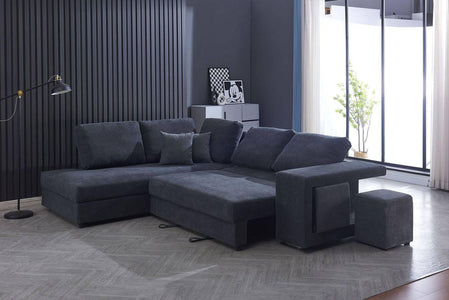
With an L-shaped or custom sofa. An L-shaped layout leaves a natural gap for a large ottoman. If you are planning a bespoke layout, a custom sofa can be sized to fit around your ottoman.
In a small living room. Choose a compact round ottoman or a storage ottoman, and pair it with a slim side table instead of a bulky coffee table.
At the end of the bed. A bench ottoman at the foot of a bed frame is useful for sitting, folding clothes and storing spare bedding. Style it with a folded throw and one or two cushions.

How to Style an Ottoman for Different Living Room Looks
- Modern: simple shapes, neutral colours and a single metal or stone tray.
- Scandinavian: light timber, soft wool throws and muted tones.
- Luxury: velvet upholstery, a marble or gold tray and a statement vase.
- Coastal: linen or cotton fabric, rattan accents and pale blue or sand colours, ideal for Sydney summers.
Finish the look with a table lamp nearby so the arrangement glows in the evening.
Ottoman vs Coffee Table: Which Is Better?
|
Feature |
Ottoman with tray |
Coffee table |
|---|---|---|
|
Safety around kids |
Soft edges, safer |
Hard corners |
|
Surface stability |
Needs a tray |
Naturally flat |
|
Extra seating |
Yes |
No |
|
Hidden storage |
Yes (storage types) |
Sometimes |
|
Spill resistance |
Needs care |
Easy to wipe |
If you love the idea of both, use a coffee table in the centre and an ottoman as a flexible extra seat.
Common Mistakes to Avoid When Styling an Ottoman
- Choosing an ottoman that is too large for the room.
- Piling on too many accessories.
- Using a wobbly tray for drinks.
- Placing it too far from the sofa to be useful.
- Picking a fabric that is hard to clean for a busy family home.
- Blocking the walkway.
- Ignoring colour harmony with the rest of the room.
How to Keep Your Ottoman Looking Beautiful
- Vacuum fabric regularly with a soft brush attachment.
- Wipe spills straight away with a clean, damp cloth, and follow the care label.
- Rotate cushions and throws.
- Keep it out of direct sunlight to prevent fading.
- Avoid heavy loads on the top.
For fabric protection ideas, read our guide on how to protect a fabric sofa from stains and spills, as many tips work for ottomans too.
Conclusion
Now you know how to style an ottoman in a way that feels polished and practical. Start with a tray, add a texture or two, keep proportions in mind and edit regularly so it never feels cluttered. Small changes like a new throw or fresh flowers can transform the whole room.
Ready to find the right piece? Explore the full range at DLB Furniture, or visit our Bankstown showroom to see the fabrics and sizes in person.
Frequently Asked Questions
What should you put on top of an ottoman?
A tray is the best base. Add a candle, a small stack of books, a vase or a decorative bowl, and keep the arrangement to two or three items.
Can you use an ottoman as a coffee table?
Yes. Add a sturdy tray for a flat, stable surface and keep drinks on it.
Should an ottoman match the sofa?
Not necessarily. Matching creates a coordinated look, while a complementary colour or texture adds interest.
Where should an ottoman go in a living room?
Most people place it in front of the sofa, beside an armchair or as part of an L-shaped seating layout.
What size ottoman is best for a living room?
Choose one close to your sofa seat height, and about two thirds of the sofa length if it will act as a coffee table.
How do you style a round ottoman?
Use a round tray, a small vase and one or two objects of different heights for a balanced look.
Are storage ottomans good for small living rooms?
Yes. They provide seating and hidden storage in one compact piece.
What colour ottoman goes with a grey sofa?
Beige, cream, navy, charcoal and muted green all work well with grey.